
WORK INJURY & RETURN-TO-WORK REHABILITATION
Work Injury Physical Therapy in Raleigh
A work injury can affect your income, independence, sleep, exercise, and ability to manage normal responsibilities. Oak City Physical Therapy provides one-on-one rehabilitation focused on restoring the movement, strength, endurance, and confidence required for a safe and sustainable return to work.
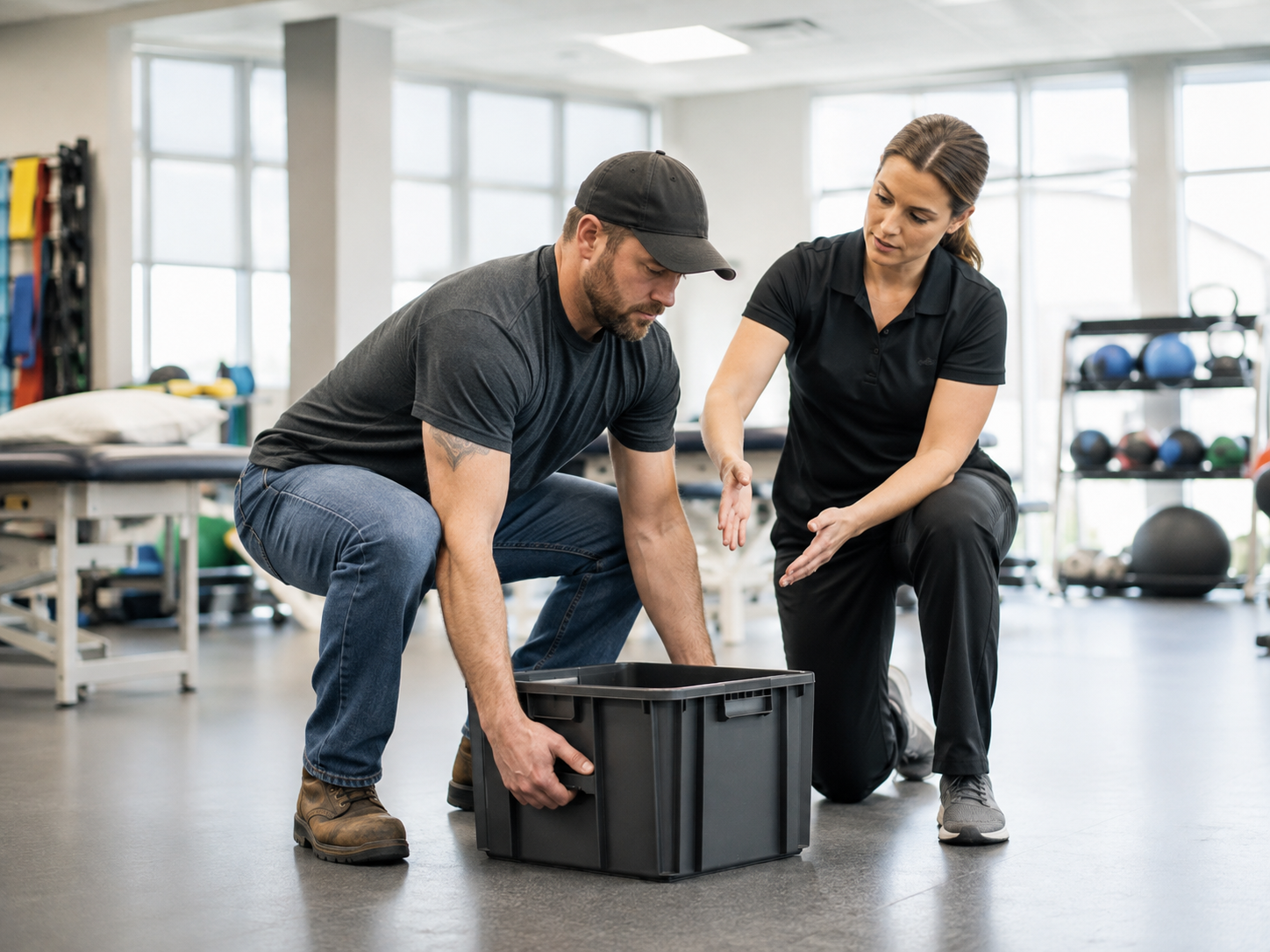
UNDERSTANDING WORK-RELATED PAIN
Returning to Work Requires More Than Feeling Better at Rest
Workplaces place different demands on the body. One job may require prolonged sitting and computer use, while another requires repeated lifting, carrying, climbing, reaching, kneeling, pushing, pulling, or working overhead.
An injury may reduce your ability to tolerate one or more of these demands. Pain may improve during daily activity before your strength, endurance, coordination, or repeated-task capacity has fully returned.
Returning too quickly without rebuilding capacity can lead to difficulty completing a full shift, compensatory movement, symptom flare-ups, or another period away from work.
Effective rehabilitation identifies the gap between what your job requires and what your body can currently perform, then progressively works to close it.
COMMON WORK-RELATED PRESENTATIONS
Injuries and Limitations We Can Help With
Work injuries may develop after one event, repetitive exposure, a fall, lifting incident, collision, gradual overload, or return to demanding activity after time away.
COMMON INJURIES
- Low-back strains and lifting injuries
- Neck and upper-back pain
- Shoulder and rotator cuff injuries
- Elbow, wrist, and hand overuse injuries
- Hip and knee injuries
- Ankle sprains and foot pain
- Muscle and tendon injuries
- Joint sprains
- Fracture rehabilitation after clearance
- Post-surgical rehabilitation
- Repetitive-use conditions
- Persistent pain after a work injury
COMMON WORK LIMITATIONS
- Difficulty lifting from the floor
- Reduced carrying tolerance
- Pain with pushing or pulling
- Difficulty reaching overhead
- Limited standing or walking tolerance
- Difficulty sitting for a full shift
- Pain with bending or twisting
- Difficulty climbing stairs or ladders
- Reduced grip strength
- Difficulty kneeling, squatting, or crawling
- Reduced tolerance for repetitive tasks
- Fear of reinjury during work activity
Significant trauma, visible deformity, suspected fracture, rapidly worsening weakness, loss of sensation, bowel or bladder changes, chest pain, or other concerning medical findings require appropriate medical evaluation.
UNDERSTANDING YOUR JOB
A Job Title Does Not Fully Describe the Physical Demands
Two people with the same job title may perform very different tasks depending on the employer, setting, equipment, staffing, and shift.
A warehouse employee may lift from the floor, carry repeatedly, push loaded equipment, and work at different heights. A healthcare worker may transfer patients, stand for long periods, react unexpectedly, and work in awkward spaces.
Office-based work may appear less physical, but prolonged sitting, keyboard use, visual concentration, commuting, and sustained postures can still exceed current tolerance after an injury.
We assess the demands of your actual job. Rehabilitation should prepare you for the tasks you perform—not an assumption based only on your job title.
BUILDING WORK CAPACITY
One Successful Lift Does Not Equal Readiness for a Full Shift
Work requires more than completing an isolated task. Employees may need to repeat the same movement for hours, maintain concentration while fatigued, react to changing demands, and recover well enough to return the following day.
Strength
Produce enough force to lift, carry, push, pull, climb, or control equipment safely.
Endurance
Sustain movement, posture, walking, reaching, or repeated tasks over the duration of a shift.
Task Tolerance
Perform job-specific movements with appropriate mechanics, confidence, and symptom response.
Recovery
Complete the workload without a severe or prolonged flare-up that prevents future activity.
Return-to-work readiness should consider force, repetition, duration, fatigue, and next-day recovery—not one successful clinic test.
MODIFIED DUTY & RESTRICTIONS
Temporary Modification Can Support a Safer Return
Some employees can return to work before they are ready for every component of their full-duty role.
Temporary restrictions may reduce exposure to the most demanding tasks while preserving work routine, confidence, activity, and income.
Restrictions should reflect the injury, current abilities, medical guidance, available job duties, and expected progression. They should not remain unchanged indefinitely without reassessment.
Physical therapists provide clinical findings and functional information. Specific work-status decisions may also involve the referring medical provider, employer, insurer, or claim administrator.
SUSTAINABLE RETURN TO WORK
Why Symptoms May Return After Resuming Work
A worker may feel better during basic daily activity but still lack the capacity required for a full workload.
Strength Was Not Fully Restored
Light exercise may feel manageable while heavier work continues to exceed current force capacity.
Endurance Was Undertrained
Completing a task once is different from repeating it throughout a shift.
Workload Increased Too Quickly
A sudden return to full hours or full duty may exceed what has been rebuilt during rehabilitation.
Rehabilitation Was Not Job-Specific
Generic exercises may not prepare the body for the positions, loads, pace, and unpredictability of work.
Rehabilitation should progress until the clinic program meaningfully resembles the demands you will face at work.
OUR CLINICAL EVALUATION
A One-on-One Assessment of Injury and Work Capacity
Your examination is based on the injury, current symptoms, medical restrictions, job demands, work status, and personal goals.
Injury and Work History
We review how the injury occurred, medical care received, work status, prior injuries, job tasks, and symptom behavior.
Movement and Mobility
We assess the body regions involved and the positions required for bending, reaching, squatting, lifting, or prolonged work.
Strength and Endurance
Testing may include grip, upper-body, trunk, hip, leg, balance, or repeated-task capacity.
Functional Work Tasks
We assess appropriate lifting, carrying, pushing, pulling, reaching, walking, or other job-specific activities.
Objective findings establish a baseline and help determine whether rehabilitation is closing the gap between current ability and job demand.
INDIVIDUALIZED REHABILITATION
How Oak City Physical Therapy Can Help
Treatment is based on the injury, healing requirements, measurable deficits, work restrictions, job demands, and response to activity.
Progressive Strength Training
Build measurable force production for lifting, carrying, pushing, pulling, climbing, reaching, and other work demands.
Work-Endurance Training
Progress repetition, duration, cardiovascular demand, and tolerance for sustained activity.
Functional Task Training
Practice lifting, carrying, reaching, kneeling, climbing, or other job-specific movement patterns.
Graded Exposure
Reintroduce movements or tasks that have become painful, avoided, or associated with fear of reinjury.
Manual Therapy
Hands-on care may help reduce guarding or improve short-term mobility so active rehabilitation can progress.
Education and Load Management
Understand symptom response, pacing, temporary modification, recovery, and progression back to greater workload.
A PLANNED RETURN
Return to Work Should Progress With Your Abilities
The exact sequence depends on the injury and workplace, but the process should move from protected activity toward realistic job exposure.
Establish Safety
Review the diagnosis, healing restrictions, current symptoms, and work-status recommendations.
Restore Basic Function
Improve movement, walking, transfers, reaching, gripping, and tolerable daily activity.
Build Strength
Progress resistance for the muscle groups and movement patterns required at work.
Increase Endurance
Add repetitions, longer work periods, sustained positions, and cardiovascular demands.
Recreate Job Tasks
Practice relevant lifting, carrying, pushing, reaching, climbing, kneeling, or desk-based activities.
Resume Full Duty
Progress toward normal work demands based on healing, demonstrated capacity, medical guidance, and symptom response.
CLINICAL DOCUMENTATION
Your Record Should Clearly Describe Function and Progress
Work-injury care often requires accurate documentation of the injury, current restrictions, objective findings, treatment, response, and functional progress.
We document how the condition affects relevant tasks such as lifting, carrying, standing, sitting, walking, reaching, climbing, computer use, and completing a full shift.
Documentation must remain clinically grounded. Our role is to describe your physical condition, limitations, treatment, and progress accurately.
WORKERS’ COMPENSATION & AUTHORIZATION
Claim Requirements May Affect Scheduling and Billing
Workers’ compensation arrangements vary. Treatment may require claim information, authorization, a referral, employer details, or communication with a claim representative before care begins.
Claim Information
Provide the claim number, date of injury, employer information, and available insurer or administrator details.
Authorization
Some claims require approval for the evaluation, follow-up visits, or additional treatment.
Medical Coordination
We may communicate with the referring provider or other authorized parties when restrictions or treatment needs require clarification.
Clinical Role
We provide physical therapy, functional findings, and documentation. We do not determine legal responsibility or claim benefits.
Contact the clinic before scheduling a workers’ compensation evaluation so the required claim and authorization information can be reviewed.
WHEN TO SEEK PROMPT MEDICAL CARE
Some Workplace Injuries Need Immediate Evaluation
Serious trauma or rapidly worsening symptoms should not be treated as a routine strain or overuse injury.
Call emergency services for severe trauma, loss of consciousness, major bleeding, chest pain, stroke-like symptoms, or another suspected medical emergency.
YOUR FIRST APPOINTMENT
What to Expect at Your First Visit
Your first visit is a 45-minute, one-on-one evaluation with a Doctor of Physical Therapy.
We will review how the injury occurred, medical care received, current restrictions, job duties, work status, symptom behavior, and the tasks you need to regain.
The examination may include mobility, strength, endurance, neurological screening, lifting, carrying, reaching, walking, gripping, or other appropriate functional activities.
Please bring when available:
FREQUENTLY ASKED QUESTIONS
Work Injury Physical Therapy FAQs
Do I need authorization before scheduling?
Some workers’ compensation claims require authorization, a referral, or specific claim information before treatment begins. Contact the clinic so the available information can be reviewed.
What should I bring to my first appointment?
Bring identification, claim information, employer details, written restrictions, referral or authorization documents, medical records, and a job description when available.
Can I return to work before I am completely pain-free?
Sometimes. A gradual or modified return may be appropriate depending on the injury, job demands, current capacity, medical guidance, and available modified duties.
What is modified duty?
Modified duty temporarily changes certain job demands, such as lifting weight, reaching frequency, shift length, or prolonged positions, while recovery continues.
Who determines my work restrictions?
The process varies by claim. Work status may involve the authorized medical provider, employer, insurer, and clinical findings from physical therapy.
Does less pain mean I am ready for full duty?
Not automatically. Full duty may require strength, endurance, repeated-task tolerance, lifting capacity, balance, and confidence beyond what is needed for normal daily activity.
Will therapy include my actual work tasks?
When appropriate and safe, rehabilitation should include movements and demands that resemble your job, such as lifting, carrying, reaching, pushing, pulling, climbing, or prolonged positioning.
What is work conditioning?
Work conditioning is a more intensive, job-focused rehabilitation approach designed to improve strength, endurance, and repeated-task capacity. Not every patient requires a formal work-conditioning program.
Can physical therapy help with a repetitive-use injury?
Yes. Treatment may address strength, tendon capacity, movement, workstation or task tolerance, workload progression, and recovery strategies.
How long does work-injury rehabilitation take?
The timeline depends on the injury, tissue healing, symptom duration, physical job demands, baseline capacity, restrictions, and consistency with rehabilitation.