
TEMPOROMANDIBULAR JOINT (TMJ) PHYSICAL THERAPY
TMJ and Jaw Pain Physical Therapy in Raleigh
Jaw pain can interfere with eating, talking, yawning, sleeping, and concentrating throughout the day. Symptoms may also occur alongside headaches, neck pain, facial tension, clicking, or difficulty opening the mouth. Oak City Physical Therapy provides one-on-one care focused on restoring comfortable jaw movement, muscular capacity, and confidence.
UNDERSTANDING JAW PAIN
TMJ and TMD Are Not the Same Thing
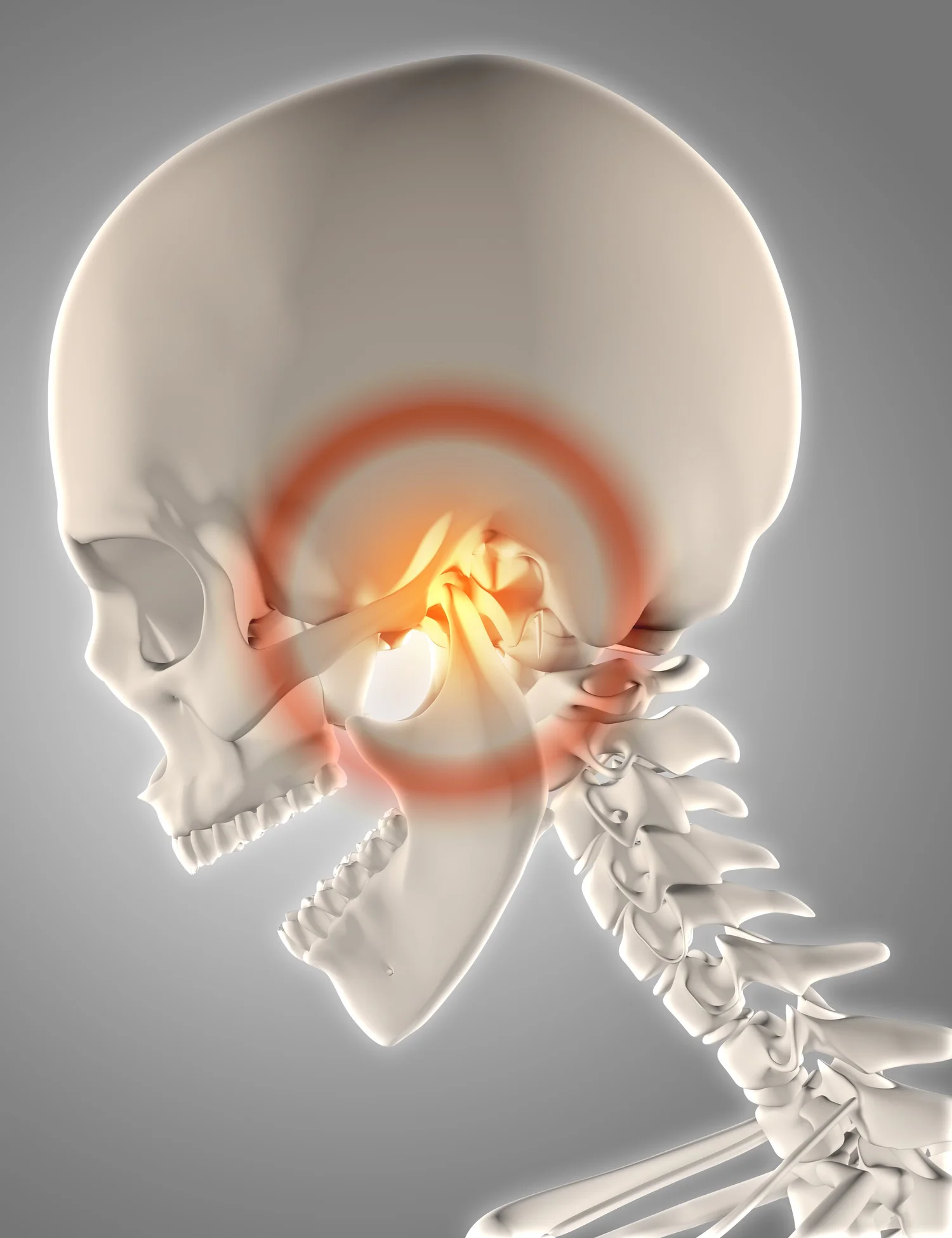
The temporomandibular joint, or TMJ, is the joint located in front of each ear that connects the jaw to the skull.
Temporomandibular disorders, or TMDs, are a broader group of conditions involving the jaw joints, chewing muscles, surrounding tissues, or headaches associated with jaw dysfunction.
Symptoms may be primarily muscular, joint-related, or influenced by a combination of jaw use, clenching, sleep, stress, neck pain, previous trauma, sensitivity, and daily habits.
Effective treatment begins by identifying the pattern rather than assuming every patient has the same joint problem or needs the same intervention.
HOW TMD MAY PRESENT
Symptoms and Conditions We Can Help With
Jaw symptoms may develop gradually, after dental work, following an injury, during periods of increased clenching, or alongside neck pain and headaches.
COMMON SYMPTOMS
- Pain near the jaw joint or in front of the ear
- Facial or chewing-muscle soreness
- Difficulty opening the mouth comfortably
- Pain with chewing or biting
- Clicking, popping, or grinding sounds
- Jaw catching or intermittent locking
- Headaches associated with jaw tension
- Neck pain occurring with jaw symptoms
- Fatigue while chewing or talking
- Morning jaw soreness or tightness
- Symptoms after prolonged dental procedures
- Difficulty returning to normal eating
COMMON TMD PRESENTATIONS
- Jaw-muscle or myofascial pain
- TMJ arthralgia
- Disc-related clicking or movement dysfunction
- Limited mouth opening
- Jaw deviation during opening
- Jaw pain associated with clenching
- Headache associated with TMD
- Neck-related contributions to jaw pain
- Post-traumatic jaw dysfunction
- Persistent or recurring jaw pain
- Postoperative rehabilitation after clearance
- Jaw weakness or poor movement coordination
Tooth pain, infection, facial swelling, salivary-gland conditions, neurological disorders, migraine, ear disorders, and other medical conditions can produce symptoms near the jaw. Referral may be recommended when the presentation does not appear musculoskeletal.
CLENCHING & GRINDING
Jaw Tension Is Not Always a Habit You Can Simply Turn Off
Clenching and grinding are often grouped under the term bruxism. They may occur while awake, during sleep, or without the person realizing they are doing it.
Awake clenching may be influenced by concentration, stress, work habits, pain, or repeated tooth contact. Sleep bruxism is more complex and cannot always be controlled through conscious relaxation.
Physical therapy does not promise to eliminate sleep grinding. Rehabilitation may instead help reduce daytime jaw overactivity, improve resting awareness, restore movement, address muscular soreness, and build tolerance for chewing and speaking.
At rest, the teeth generally do not need to remain clenched together. Improving awareness of unnecessary daytime jaw tension may reduce repeated muscular loading.
CLICKING, POPPING & LOCKING
Jaw Sounds Should Be Interpreted Alongside Pain and Function
Clicking or popping may occur when structures within the joint move differently during opening and closing. A sound by itself does not automatically require treatment.
Painless Clicking
A painless sound without locking or functional limitation may not require intervention.
Painful Clicking
Pain with opening, chewing, or joint loading warrants a more detailed examination.
Intermittent Catching
Occasional catching may affect movement confidence and should be assessed in the context of the full symptom pattern.
Jaw Locking
Inability to fully open or close the jaw may require prompt dental, medical, or specialist evaluation.
Treatment is aimed at pain and function—not automatically eliminating every normal or persistent joint sound.
THE JAW, NECK & HEADACHE CONNECTION
Jaw Symptoms and Neck Symptoms Often Overlap
The jaw and upper cervical region have closely related muscular, neurological, and functional connections.
Some people with TMD also demonstrate neck pain, limited cervical mobility, reduced neck-muscle endurance, headache, or sensitivity through the upper shoulder region.
This does not mean posture or the neck is always the root cause of jaw pain. It means cervical findings should be assessed when they appear relevant rather than treating the jaw in isolation.
Treatment may combine jaw-specific exercise with cervical mobility, strength, endurance, and selective manual therapy.
OUR CLINICAL APPROACH
A One-on-One Assessment of Jaw Function
Your examination is selected according to your pain location, clicking or locking, chewing limitations, headache history, dental history, cervical symptoms, and functional goals.
Detailed History
We discuss symptom onset, dental procedures, trauma, clenching, headaches, sleep, stress, eating limitations, and previous treatment.
Jaw Movement
We assess mouth opening, closing, side-to-side movement, protrusion, movement quality, deviation, clicking, and symptom response.
Muscle and Joint Function
We evaluate relevant chewing muscles, joint sensitivity, muscular activation, endurance, and tolerance for resisted movement.
Neck and Neurological Screening
When appropriate, we examine cervical mobility, strength, headache features, cranial-nerve findings, and other relevant systems.
The goal is to determine whether your presentation is appropriate for physical therapy and whether dental, medical, or specialist collaboration is also recommended.
INDIVIDUALIZED TREATMENT
How Oak City Physical Therapy Can Help
Treatment is based on your symptom pattern, examination findings, irritability, movement limitations, daily habits, and goals.
Jaw Mobility
Restore comfortable opening, closing, and side-to-side movement using exercises matched to your presentation.
Strength and Coordination
Improve muscular control and tolerance for speaking, chewing, yawning, and other jaw activities.
Cervical Rehabilitation
Address neck mobility, strength, endurance, and headache contributors when they are relevant.
Education and Habit Modification
Identify repeated clenching, excessive chewing, resting habits, and other behaviors that may be increasing demand.
Manual Therapy
Joint and soft-tissue techniques may be used when pain, guarding, or stiffness limits movement and exercise.
Graded Return to Normal Function
Progress chewing, speaking, yawning, dental tolerance, and other meaningful activities according to your response.
COLLABORATIVE CARE
Some Jaw Conditions Require More Than Physical Therapy
TMD can overlap with dental, sleep, neurological, headache, and medical conditions. Coordinated care helps ensure the right problem is being treated by the right provider.
Dentist
May evaluate tooth pain, tooth wear, bite appliances, dental infection, and other oral-health concerns.
Oral and Maxillofacial Specialist
May be appropriate for significant joint trauma, persistent locking, structural concerns, or surgical consultation.
Medical Provider
May help evaluate medication needs, systemic arthritis, neurological symptoms, sleep problems, or nonmusculoskeletal causes.
Headache or Behavioral-Health Provider
May assist when migraine, persistent pain, anxiety, sleep, stress, or behavioral contributors require additional care.
Referral does not mean physical therapy has failed. It means the condition may benefit from coordinated care across multiple specialties.
WHEN TO SEEK PROMPT EVALUATION
Some Jaw or Facial Symptoms Need Dental or Medical Care First
Most jaw pain is not caused by a dangerous condition. However, infection, significant trauma, neurological symptoms, and other nonmusculoskeletal conditions require appropriate evaluation.
Seek emergency care for difficulty breathing, new stroke-like symptoms, severe trauma, or another suspected medical emergency.
YOUR FIRST APPOINTMENT
What to Expect at Your First Visit
Your first visit is a 45-minute, one-on-one evaluation with a Doctor of Physical Therapy.
We will review your jaw, headache, neck, dental, and medical history and discuss the activities most affected by your symptoms.
The examination may include jaw movement, muscle and joint assessment, cervical testing, neurological screening, and evaluation of chewing, talking, or other relevant functional tasks.
You will leave understanding:
FREQUENTLY ASKED QUESTIONS
TMJ and Jaw Pain FAQs
What is the difference between TMJ and TMD?
TMJ refers to the temporomandibular joint itself. TMD refers to a group of disorders involving the jaw joints, chewing muscles, and related structures.
Does jaw clicking mean the disc is damaged?
Not necessarily. Clicking may occur with changes in how the joint disc moves, but a painless click without locking or functional limitation may not require treatment.
Can physical therapy help jaw pain?
Physical therapy may help selected patients improve pain, jaw motion, muscular function, cervical contributors, and tolerance for chewing or speaking. Results depend on the diagnosis and individual presentation.
Are my headaches coming from my jaw?
Jaw disorders can contribute to some headache presentations, but not every headache is caused by TMD. Migraine, cervicogenic headache, and other headache disorders may overlap and require different treatment.
Can neck problems contribute to jaw pain?
Yes. Neck pain, reduced cervical mobility, muscular endurance limitations, and headache may overlap with TMD. The neck should be assessed when it appears clinically relevant.
Do I need a mouth guard?
Not every patient needs an oral appliance. A dentist should evaluate appliance needs, tooth wear, dental health, and bite-related concerns. Physical therapists do not prescribe or fabricate dental appliances.
Can physical therapy stop nighttime grinding?
Physical therapy cannot guarantee that sleep bruxism will stop. Treatment may help reduce muscular soreness, improve jaw function, and address unnecessary daytime clenching or related neck symptoms.
Should I avoid hard or chewy foods?
Temporary modification may help during an irritable flare-up. The long-term goal is generally to restore tolerance rather than avoid normal chewing indefinitely.
Is dry needling required for jaw pain?
No. Dry needling may provide short-term relief for selected muscular presentations, but it is optional and does not replace jaw exercise, habit modification, and progressive restoration of function.
How long does TMD rehabilitation take?
Recovery depends on the diagnosis, symptom duration, irritability, locking, headache or neck involvement, daily habits, health factors, and consistency with rehabilitation.