
STRETCHING & MOBILITY
Stretching and Mobility Physical Therapy in Raleigh
Move more comfortably, improve usable range of motion, and develop the control needed for everyday activity, exercise, work, and sport. At Oak City Physical Therapy, mobility treatment is individualized rather than built around a generic stretching routine.
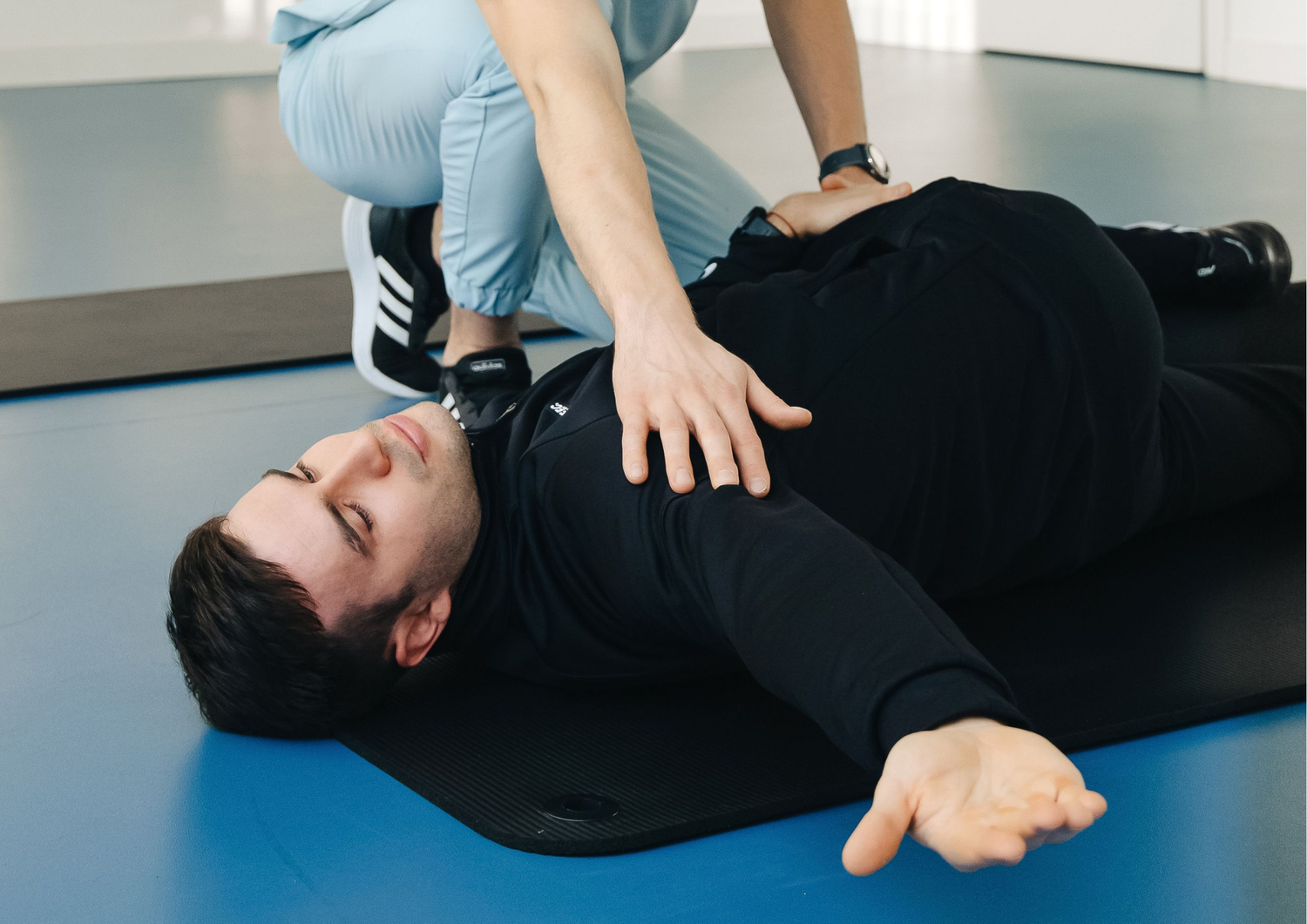
UNDERSTANDING MOVEMENT
Flexibility and Mobility Are Not the Same
Flexibility describes how far a muscle or joint can be moved, often with assistance from gravity, a strap, another person, or an external force.
Mobility describes how well you can actively move through and control that range. It depends on flexibility, strength, coordination, joint motion, balance, and confidence.
A person may have enough passive flexibility but still struggle to actively control the position. Another person may have true range-of-motion limitations that benefit from stretching or joint-specific treatment.
Our goal is not simply to make you more flexible. It is to help you develop the range and control required for the activities that matter to you.
DIFFERENT TOOLS FOR DIFFERENT GOALS
Ways We May Improve Mobility
Mobility treatment may include stretching, strengthening, controlled movement, hands-on treatment, or a combination of approaches.
Static Stretching
A position is held for a period of time to gradually improve tolerance to a longer muscle or joint position.
Dynamic Mobility
Repeated controlled movement through range, often used before exercise, lifting, running, or sport.
Active Range of Motion
You actively move and control a joint through the available range without relying on an external force.
Loaded Mobility
Strength exercises are performed through an appropriate range to build mobility and control together.
Assisted Stretching
Your therapist may use positioning, a strap, or hands-on assistance to target a specific limitation.
Joint-Specific Treatment
Manual therapy may be used when joint stiffness or pain is restricting comfortable movement.
POTENTIAL BENEFITS
What Mobility Training Can Help Improve
The purpose of mobility work is to improve movement that supports your daily life, rehabilitation, or performance goals.
Increase Range of Motion
Improve access to positions that are limited by stiffness or reduced movement tolerance.
Build Control Through Range
Develop strength and coordination near the edges of your available movement.
Support Exercise Performance
Improve positioning for lifting, running, reaching, squatting, or sport-specific movement.
Improve Movement Confidence
Gradual exposure can make previously uncomfortable positions feel safer and more manageable.
A COMMON MISUNDERSTANDING
Feeling Tight Does Not Always Mean You Need More Stretching
Tightness is a sensation, not a diagnosis. It can occur for several reasons, and the best solution depends on what is driving it.
True Range Limitation
A muscle or joint may have a measurable restriction that responds to stretching or mobility work.
Muscle Fatigue
Overworked or under-conditioned muscles may feel tight even when range of motion is normal.
Protective Guarding
Pain, stress, or uncertainty may cause the nervous system to limit comfortable movement.
Lack of Strength or Control
A position may feel restricted because you cannot yet control or tolerate it under load.
Sometimes the answer is stretching. Other times it is strengthening, changing activity load, improving movement control, or addressing pain.
CHOOSING THE RIGHT APPROACH
Static Stretching or Dynamic Mobility?
Neither approach is automatically better. The best choice depends on what you are preparing to do and what you are trying to improve.
STATIC STRETCHING
Useful for Focused Range-of-Motion Work
Static stretching may be useful when your goal is to gradually improve flexibility or become more comfortable in a specific position.
- Often used after activity or in a separate mobility session
- Can target a clearly identified range limitation
- Should feel controlled rather than aggressive
- Does not need to be painful to be effective
DYNAMIC MOBILITY
Useful Before Exercise and Sport
Dynamic mobility uses active repeated movement to prepare the body for the speed, range, and demands of the activity ahead.
- Often preferred as part of a warm-up
- Raises temperature and increases movement readiness
- Can be matched to lifting, running, or sport demands
- May progress from slower to faster movements
LOADED MOBILITY
Strength Training Can Improve Mobility Too
Stretching is not the only way to improve range of motion. Strength training performed through an appropriate range can improve flexibility while also building strength and control.
Examples may include split squats, loaded calf raises, deep squat variations, Romanian deadlifts, overhead pressing, or controlled rotation exercises.
The exercise, depth, resistance, and speed are selected according to your current ability. The goal is gradual exposure—not forcing the body into a painful position.
WHEN IT MAY BE USEFUL
Who May Benefit From Mobility Training?
Mobility treatment may be appropriate when restricted or uncomfortable movement is affecting daily life, exercise, work, or sport.
THE OAK CITY APPROACH
Mobility Training Built Around Your Goals
We identify what is actually limiting movement and use the least complicated approach that helps you make meaningful progress.
Measure the Limitation
We assess range, symptoms, strength, control, and relevant functional movement.
Individualize the Plan
Exercises are selected according to your body, goals, activity, and current tolerance.
Build Strength Through Range
We reinforce new mobility with active control and progressive loading.
Track Real Progress
Success is measured by improved movement and function—not by how many stretches you perform.
FREQUENTLY ASKED QUESTIONS
Stretching and Mobility FAQs
What is the difference between flexibility and mobility?
Flexibility describes available range of motion. Mobility describes your ability to actively move through and control that range.
Does feeling tight mean a muscle is physically shortened?
Not necessarily. Tightness may be related to fatigue, guarding, sensitivity, reduced strength, activity load, or a true range-of-motion limitation.
How long should I hold a stretch?
The appropriate duration depends on the goal, body area, and your response. Many stretches are held for approximately 20 to 60 seconds, but longer is not automatically better.
Should stretching hurt?
No. Mild tension or discomfort may be acceptable, but sharp pain, numbness, tingling, or significant symptom worsening should not be ignored.
Should I stretch before working out?
A dynamic warm-up is often more useful before exercise. Brief static stretching may also be appropriate when a specific restriction interferes with the activity, especially when followed by active movement.
Can strength training improve flexibility?
Yes. Strength training performed through an appropriate range can improve range of motion while also developing strength and control.
Do I need to stretch every day?
Not everyone needs daily stretching. Frequency should reflect your goals, current limitation, overall training plan, and response.
Why am I still tight even though I stretch frequently?
The sensation may not be caused by a true flexibility restriction. You may benefit more from strengthening, movement variability, recovery, activity modification, or a more specific evaluation.