
SPORTS & RUNNING INJURY REHABILITATION
Sports and Running Physical Therapy in Raleigh
Getting out of pain is only the beginning. Returning to running, strength training, field or court sports, and demanding recreational activity requires a rehabilitation plan that restores strength, speed, endurance, impact tolerance, and confidence.
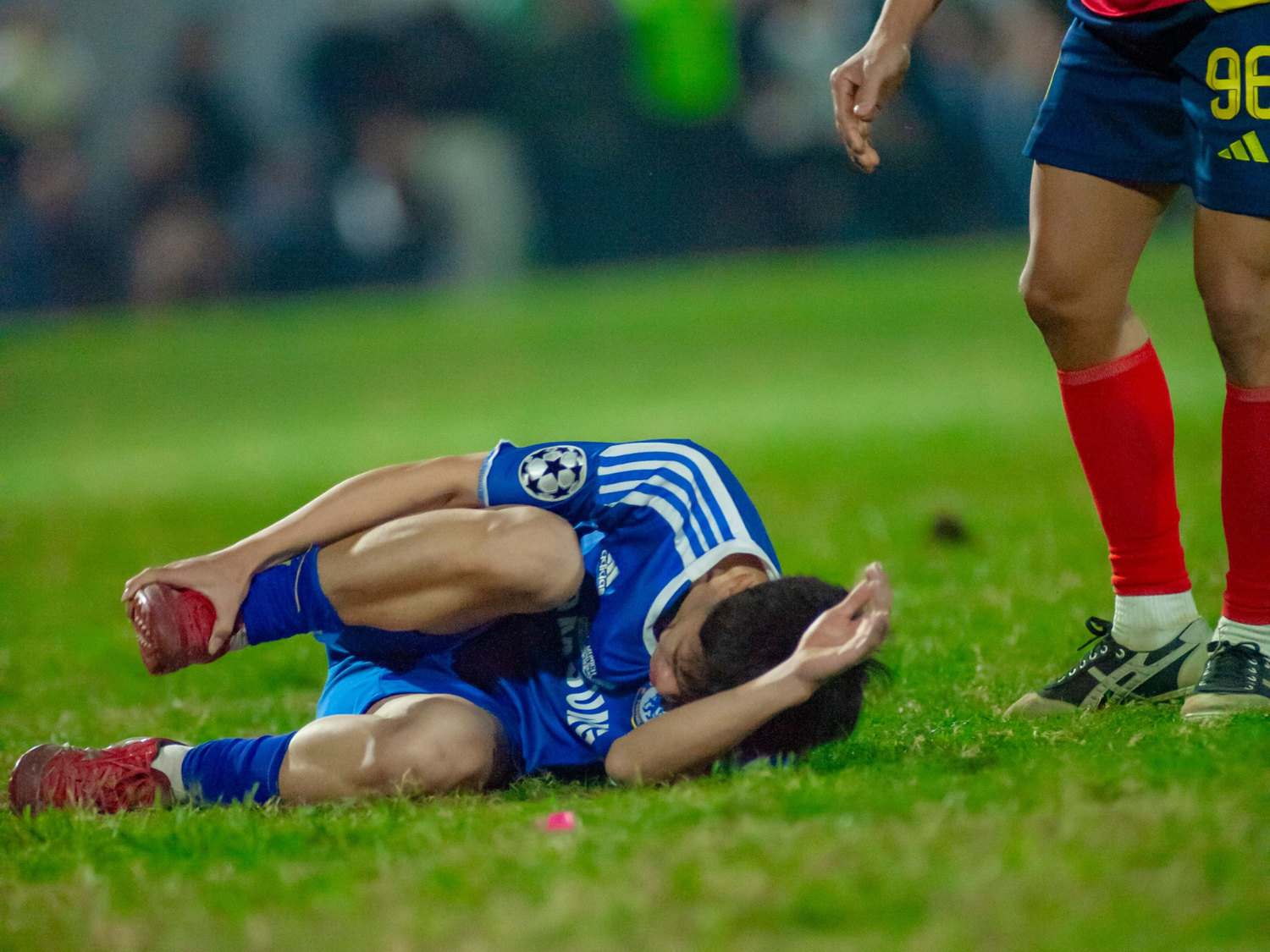
A PERFORMANCE-BASED PERSPECTIVE
Many Sports Injuries Are Capacity Problems
Muscles, tendons, bones, and joints adapt to repeated physical stress. Training creates the stimulus for those tissues to become stronger and more capable.
Symptoms often emerge when training or competition demands increase faster than the body can adapt. This may follow a sudden increase in mileage, intensity, lifting volume, practice time, hills, speed work, jumping, or change-of-direction activity.
This does not mean all injuries are simply caused by “doing too much.” Previous injury, strength deficits, recovery, nutrition, sleep, tissue healing, movement tolerance, and sport demands may all contribute.
Our role is to identify the most relevant factors and build a structured path from rehabilitation back to performance.
WHO WE WORK WITH
Rehabilitation for Runners, Lifters, and Active Adults
You do not need to be a professional athlete to receive performance-based care. Rehabilitation should match the demands of whatever sport or activity matters to you.
ATHLETES AND ACTIVITIES
- Recreational and competitive runners
- Strength-training and CrossFit athletes
- Field- and court-sport athletes
- Golfers and rotational athletes
- Overhead and throwing athletes
- Hikers and outdoor athletes
- High-school and college athletes
- Active adults returning to exercise
- Weekend warriors
- Individuals preparing for a race or event
COMMON SPORTS INJURIES
- Running-related knee pain
- Achilles and patellar tendinopathy
- Plantar heel pain
- Hamstring, calf, or muscle strains
- Bone-stress injuries after medical clearance
- Ankle sprains and instability
- ACL and postoperative knee rehabilitation
- Shoulder and rotator cuff injuries
- Low-back pain during lifting or sport
- Recurring overuse injuries
Suspected fracture, significant swelling or deformity, inability to bear weight, rapidly worsening weakness, concussion symptoms, chest pain, or other concerning medical findings require appropriate evaluation.
TRAINING LOAD & RECOVERY
Injury Risk Is More Complex Than the “10% Rule”
There is no single mileage or training rule that prevents every injury. Two athletes can complete the same program and respond differently because their training history, strength, recovery, sleep, nutrition, previous injuries, and overall stress are different.
Large, unfamiliar increases in one run, one workout, or one week can exceed current capacity. But automatically reducing every program to a fixed percentage may also be too simplistic.
We look at the full training picture: recent mileage, longest run, intensity, hills, speed work, lifting, competition, recovery, and symptom response.
Training progression should be individualized. The appropriate increase depends on what you have recently tolerated and what the next phase requires.
RUNNING INJURY REHABILITATION
Returning to Running Requires More Than Waiting for Pain to Stop
Running repeatedly exposes the body to force. The goal of rehabilitation is not to eliminate all impact, but to progressively restore the ability to absorb and produce it.
Restore Strength
Address relevant calf, quadriceps, hamstring, hip, trunk, and single-leg strength limitations.
Rebuild Impact Tolerance
Progress walking, hopping, jumping, and running exposure according to the injury and current response.
Manage Running Load
Adjust distance, speed, frequency, terrain, hills, and workout type without automatically stopping all running.
Prepare for the Goal Event
Build toward the actual distance, pace, elevation, and fatigue demands of training or competition.
Return-to-running decisions should reflect tissue healing, symptoms, walking tolerance, strength, impact readiness, and the demands of the planned program—not time alone.
MOVEMENT & RUNNING ANALYSIS
Movement Analysis Is a Tool—not a Search for Perfect Form
There is no single running style, squat, landing pattern, or lifting technique that is ideal for every athlete.
Movement analysis can help identify strategies that may be increasing symptoms, reducing performance, or shifting excessive demand to a sensitive region.
When a modification is useful, it should produce a meaningful change in symptoms, efficiency, confidence, or task performance. Small visual differences do not automatically require correction.
OUR CLINICAL MODEL
A One-on-One Assessment Built Around Your Sport
The evaluation should reflect the demands of your activity—not stop at identifying where it hurts.
Injury and Training History
We review symptom onset, recent workload, previous injuries, competition schedule, recovery, and performance goals.
Strength and Capacity
We assess force production, muscular endurance, side-to-side differences, and strength relative to activity demands.
Movement and Impact
Testing may include running, squatting, jumping, landing, throwing, lifting, or change of direction.
Sport-Specific Readiness
We identify the speed, volume, fatigue, power, and skill demands that must be restored before full return.
Objective findings create the starting point. Repeated testing helps show whether rehabilitation is actually closing the gap.
INDIVIDUALIZED REHABILITATION
How Oak City Physical Therapy Can Help
Treatment is based on the injury, healing considerations, measurable deficits, current training level, and performance goals.
Progressive Strength Training
Restore force production and muscular capacity using measurable, progressively loaded exercise.
Load Management
Modify training without unnecessarily removing all activity, then rebuild volume and intensity.
Running and Impact Progression
Restore walking, running, jumping, landing, sprinting, and repeated impact according to the goal.
Speed, Power, and Agility
Progress acceleration, deceleration, change of direction, reactive tasks, and explosive force when appropriate.
Movement and Skill Integration
Practice the patterns, positions, and decisions required for lifting, running, work, or sport.
Return-to-Sport Planning
Use objective milestones and gradual participation to progress from rehabilitation to practice and full performance.
A CRITERIA-BASED PROGRESSION
Return to Sport Is a Continuum
Returning is not one final test or a single date. Athletes progress from rebuilding capacity to controlled participation, full sport, and eventually previous or improved performance.
Restore Foundational Capacity
Address pain, mobility, muscle activation, basic strength, and tissue healing requirements.
Build Strength and Endurance
Progress measurable force production and repeated work capacity.
Restore Running and Impact
Introduce graded running, hopping, landing, and faster loading.
Return to Participation
Rejoin selected practice components with controlled volume and intensity.
Return to Sport
Resume full training or competition when relevant readiness criteria are met.
Return to Performance
Rebuild previous or improved speed, power, confidence, fitness, and competitive capacity.
YOUR FIRST APPOINTMENT
What to Expect at Your First Visit
Your first visit is a 45-minute, one-on-one evaluation with a Doctor of Physical Therapy.
We will review the injury, your training history, current symptoms, previous rehabilitation, and the activity or competition you want to return to.
Testing is selected according to your current stage. Early evaluations may focus on pain, mobility, strength, and basic function, while later visits may include running, lifting, jumping, or sport-specific tasks.
You will leave understanding:
FREQUENTLY ASKED QUESTIONS
Sports and Running Rehabilitation FAQs
Do I need to stop running completely?
Not always. Some injuries require a temporary pause, but many runners can continue with adjustments to distance, speed, frequency, hills, terrain, or total training load.
Is the 10% rule the safest way to increase mileage?
It can provide a simple starting point, but it is not a universal injury-prevention rule. Progression should reflect your recent training, longest run, injury history, recovery, symptoms, and goals.
Do I need my running form corrected?
Not automatically. Movement changes are most useful when they produce a meaningful improvement in symptoms, load distribution, confidence, or performance.
Can I keep lifting while rehabilitating an injury?
Often, yes. Exercises, range, resistance, volume, or frequency may need modification, but maintaining useful training is often preferable to complete inactivity.
When can I return to running after an injury?
The answer depends on the injury, tissue healing, walking tolerance, strength, impact readiness, symptom response, and planned running demands. Return should be criteria-based rather than based only on time.
Does being pain-free mean I am ready for sport?
No. Pain-free daily activity may occur before strength, endurance, speed, impact tolerance, and sport-specific confidence have returned.
Will strength training make me slower or heavier?
Properly programmed strength training can improve force production, running performance, durability, and athletic capacity without automatically causing unwanted weight gain.
Do I need imaging before starting rehabilitation?
Many sports injuries can begin with a clinical evaluation. Imaging may be appropriate after significant trauma, suspected fracture or bone-stress injury, major weakness, surgical planning, or lack of expected progress.
How long will sports rehabilitation take?
Recovery depends on the injury, tissue-healing requirements, symptom duration, baseline capacity, sport demands, and consistency with the rehabilitation and training plan.
What is the difference between rehabilitation and performance training?
Rehabilitation initially focuses on restoring function after pain or injury. Performance training continues the progression toward higher levels of strength, speed, power, conditioning, and sport-specific capacity.