
IASTM & CUPPING
Soft Tissue Techniques in Raleigh
Instrument-assisted soft tissue mobilization and cupping may help reduce short-term sensitivity, improve movement tolerance, and prepare an area for active rehabilitation. At Oak City Physical Therapy, these techniques are used selectively as part of a broader treatment plan.
UNDERSTANDING THE TREATMENT
What Are Soft Tissue Techniques?
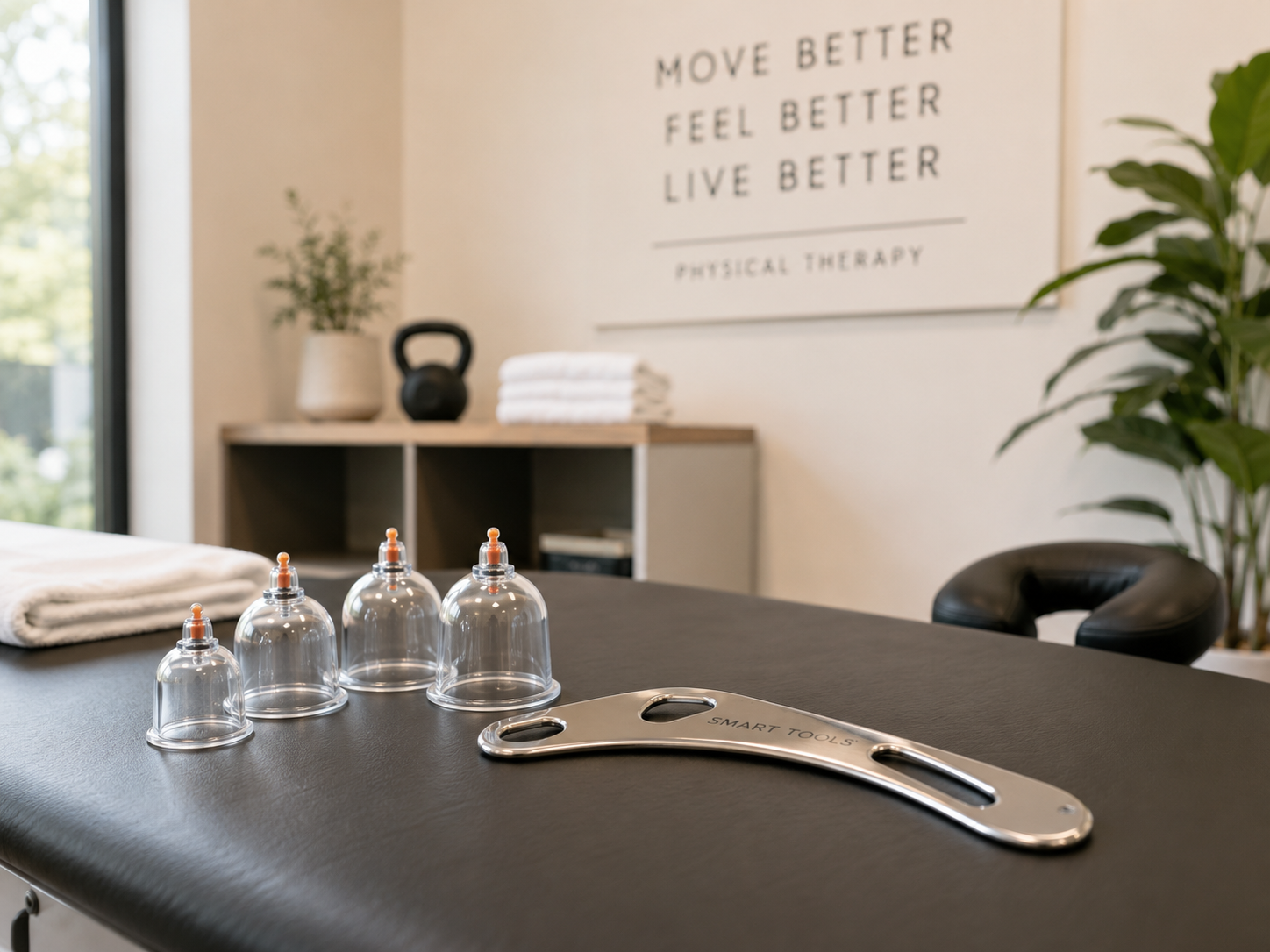
Soft tissue techniques are treatments directed toward muscles, tendons, skin, and surrounding connective tissues. This page focuses on instrument-assisted soft tissue mobilization, commonly called IASTM, and cupping.
IASTM uses a smooth handheld tool to apply controlled pressure across a treatment area. Cupping uses negative pressure created by a cup placed on the skin.
These techniques may influence pain sensitivity, muscle guarding, circulation, and short-term movement tolerance. They do not permanently lengthen tissue, remove toxins, or break apart scar tissue.
Their main purpose is often to make movement or exercise more comfortable and effective.
TWO DIFFERENT APPROACHES
IASTM and Cupping
Both treatments are directed toward soft tissues, but they apply force in different ways.
IASTM
Instrument-Assisted Soft Tissue Mobilization
A smooth handheld tool is used to apply controlled pressure and movement across muscles, tendons, or surrounding tissues.
- Uses direct pressure
- May influence sensitivity and short-term stiffness
- Can be applied while the tissue is relaxed or moving
- Often followed by mobility or strengthening
CUPPING
Negative-Pressure Soft Tissue Treatment
Cups are placed on the skin to create suction and lift the superficial tissues rather than pressing downward.
- Uses negative pressure
- May influence local sensitivity and circulation
- Can be stationary or moved across the skin
- May temporarily leave circular skin discoloration
POTENTIAL BENEFITS
How These Techniques May Help
IASTM and cupping may create short-term changes that support movement and active rehabilitation.
Reduce Sensitivity
Treatment may temporarily influence how sensitive an area feels to touch or movement.
Decrease Guarding
Some patients experience less protective muscle tension after treatment.
Improve Movement Tolerance
Reduced discomfort may make stretching, mobility, or exercise easier.
Support Active Treatment
Short-term symptom changes may help you perform rehabilitation more effectively.
These techniques may help create an opportunity for progress, but they do not build strength, endurance, or long-term capacity on their own.
COMMON MISCONCEPTIONS
What These Treatments Do Not Do
Soft tissue treatments are often explained using outdated or exaggerated claims. We believe patients deserve a more accurate explanation.
They Do Not Break Up Scar Tissue
Treatment pressure does not physically scrape apart or permanently remodel tissue during a session.
They Do Not Release Toxins
Cupping marks are not evidence of toxins being pulled from the body.
They Do Not Permanently Loosen Fascia
Changes in flexibility or stiffness are usually influenced by the nervous system and movement tolerance.
They Do Not Replace Exercise
Strength, endurance, and long-term resilience require active loading.
The goal is not to “fix” tissue with a tool or cup. The goal is to use treatment strategically when it helps you move and load more effectively.
WHEN THEY MAY BE APPROPRIATE
When We May Use IASTM or Cupping
These techniques may be considered when local sensitivity, guarding, or discomfort is limiting movement or exercise.
We choose the technique based on your examination, comfort, skin tolerance, goals, and response to treatment.
DURING TREATMENT
What Do IASTM and Cupping Feel Like?
IASTM usually feels like pressure or repeated movement from a smooth treatment tool. Some areas may feel more sensitive than others.
Cupping typically feels like pulling, pressure, or tightness under the cup. The amount of suction can be adjusted based on your comfort.
Treatment should remain tolerable. Strong pain, excessive bruising, or aggressive pressure is not required for the technique to be useful.
AFTER CUPPING
Why Does Cupping Leave Marks?
Cupping may leave temporary circular discoloration where the cups were applied. These marks result from local pressure and changes in superficial blood flow.
The amount of discoloration varies and does not indicate how effective the treatment was. Darker marks do not mean more toxins were released or that a more severe problem was found.
THE OAK CITY APPROACH
Soft Tissue Treatment With a Purpose
These techniques are used only when they support a clear rehabilitation goal.
One-on-One Care
Treatment is applied directly by your Doctor of Physical Therapy.
Clear Clinical Reasoning
We explain why a technique is being recommended and what it may help.
Followed by Movement
Treatment is often followed by mobility, exercise, or strengthening.
Progress-Based Use
We continue the technique only when it contributes to meaningful progress.
FREQUENTLY ASKED QUESTIONS
IASTM and Cupping FAQs
Does IASTM break up scar tissue?
No. A treatment tool does not physically scrape apart scar tissue during a session. IASTM may influence sensitivity, movement tolerance, and short-term stiffness.
Does cupping remove toxins?
No. Cupping marks result from local pressure and superficial blood-flow changes. They are not evidence of toxins leaving the body.
Should IASTM be painful?
Some pressure or temporary tenderness may occur, but aggressive pain or heavy bruising is not required for the treatment to be useful.
How long do cupping marks last?
Marks often fade over several days, although the exact duration varies by person, treatment pressure, and location.
Do darker cupping marks mean the treatment worked better?
No. The color of a mark does not measure treatment effectiveness or indicate the severity of a problem.
Will these treatments fix tight muscles?
They may temporarily change how tight or sensitive an area feels. Longer-term improvement usually depends on movement, strengthening, recovery, and load management.
Will I receive these treatments at every visit?
Not necessarily. They are used only when your therapist believes they are helping you move, exercise, or progress more effectively.
Are IASTM and cupping covered by insurance?
These techniques are generally incorporated into physical therapy treatment rather than billed as separate stand-alone services. Coverage depends on your plan and the services provided.