
ELECTRICAL STIMULATION
Electrical Stimulation Physical Therapy in Raleigh
Electrical stimulation may be used to improve muscle activation or temporarily reduce pain as part of an individualized rehabilitation program. At Oak City Physical Therapy, the type and dosage are selected according to a specific clinical goal.
UNDERSTANDING THE TREATMENT
What Is Electrical Stimulation?
Electrical stimulation uses adhesive electrodes placed on the skin to deliver controlled electrical pulses to nearby nerves or muscles.
The experience and purpose depend on the settings being used. Some forms create a visible muscle contraction, while others create only a comfortable tingling sensation.
Electrical stimulation is not one single treatment. Different settings may be used for muscle activation, pain modulation, or other specific rehabilitation goals.
We use it as an adjunct when it helps you participate more effectively in active rehabilitation—not as a stand-alone solution.
TWO COMMON APPLICATIONS
NMES and TENS Serve Different Purposes
The terms are sometimes used interchangeably, but the intended treatment response is different.
NMES
Neuromuscular Electrical Stimulation
NMES is applied at an intensity intended to create a visible and purposeful muscle contraction.
- Targets muscle activation and contraction
- Often used when voluntary recruitment is limited
- May be combined with active exercise
- Commonly used during early postoperative rehabilitation
- Requires an appropriate, tolerable treatment intensity
TENS / SENSORY STIMULATION
Temporary Pain Modulation
TENS typically creates a strong but comfortable tingling sensation without requiring a forceful muscle contraction.
- Targets temporary changes in pain perception
- May be used during or around movement and exercise
- Does not correct the underlying cause of pain by itself
- Response varies among patients and conditions
- Should support rather than delay active treatment
MUSCLE INHIBITION
Why Can a Muscle Feel “Shut Down” After Injury or Surgery?
Pain, swelling, joint irritation, and changes in nervous-system input can reduce the body’s ability to fully recruit a nearby muscle.
Pain
Pain can reduce voluntary muscle output and make contraction feel difficult or uncertain.
Joint Swelling
Swelling within or around a joint may interfere with normal muscle recruitment.
Reduced Use
Immobilization, bracing, or avoiding the limb may contribute to rapid strength and coordination loss.
Protective Inhibition
The nervous system may reduce muscle output as a protective response after injury or surgery.
NMES may help reinforce the connection between the nervous system and the muscle while voluntary exercise and progressive strengthening are rebuilt.
MUSCLE ACTIVATION
When We May Use NMES
NMES may be considered when a patient cannot produce an adequate muscle contraction voluntarily or when additional stimulation may improve the quality of a strengthening exercise.
Knee rehabilitation is a common application, but NMES may be considered for other muscle groups when appropriate for the diagnosis and goal.
TEMPORARY SYMPTOM MODULATION
How TENS May Help With Pain
Sensory-level electrical stimulation may temporarily change the way painful signals are processed, making movement or exercise more comfortable for some people.
TENS does not repair tissue, reposition joints, remove inflammation, or permanently correct the source of pain.
Its value is usually short-term. A temporary reduction in symptoms may be useful when it helps you walk, exercise, sleep, or participate more comfortably in rehabilitation.
Not everyone responds the same way. We reassess whether stimulation is producing a meaningful benefit rather than using it automatically.
The Goal Is Better Participation
Pain modulation is most useful when it helps you perform meaningful movement or exercise—not when it becomes the entire treatment plan.
ELECTRICAL DRY NEEDLING
Electrical Stimulation May Also Be Combined With Dry Needling
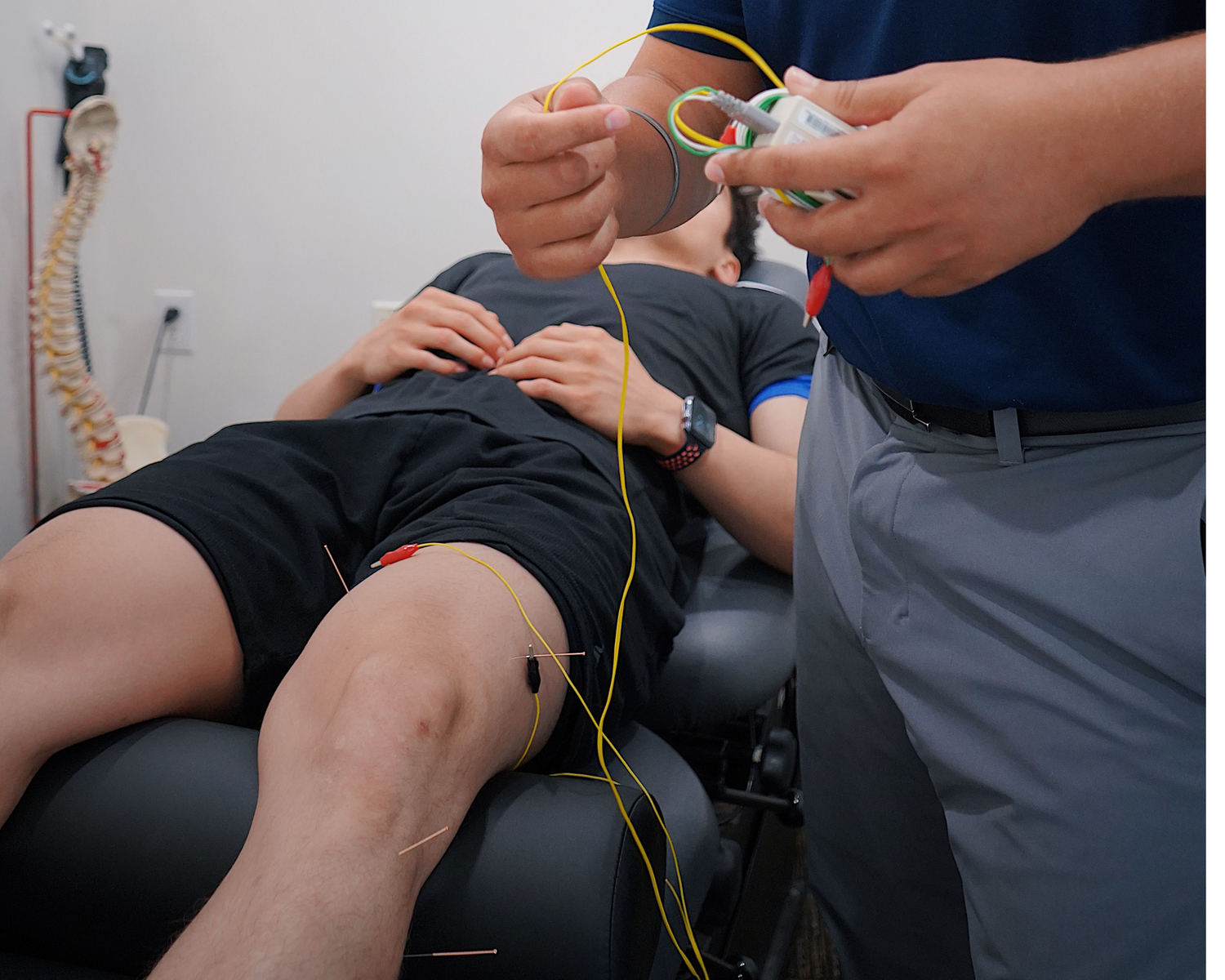
Electrical dry needling, sometimes called intramuscular electrical stimulation, involves connecting a low-level electrical current to dry-needling needles that have already been placed in the treatment area.
Because the current is delivered through the needles rather than through surface electrodes, the stimulation can be directed toward a specific muscle or treatment region.
We may use this approach to influence pain sensitivity, reduce protective muscle guarding, or create repeated muscle contractions without repeatedly moving the needles by hand.
Electrical dry needling remains an adjunct. When it creates a useful short-term change, we follow it with movement, exercise, or progressive loading based on your goals.
DURING TREATMENT
What Does Electrical Stimulation Feel Like?
The electrodes are placed on clean skin near the targeted nerves or muscles. The intensity begins low and is increased gradually.
Sensory stimulation usually feels like tingling, buzzing, or pulsing. NMES creates those sensations along with a visible muscle contraction.
The sensation may feel unusual, but it should remain tolerable. Sharp pain, burning, or significant skin irritation is not expected and should be reported immediately.
SAFETY AND SUITABILITY
Electrical Stimulation Is Not Appropriate for Every Situation
Your therapist will review your health history, skin condition, sensation, treatment location, implanted devices, and other relevant precautions before recommending electrical stimulation.
This is not a complete precaution list. Tell your therapist about implanted devices, pregnancy, changes in sensation, skin problems, circulation concerns, or other relevant medical conditions before treatment.
THE OAK CITY APPROACH
Electrical Stimulation With a Clinical Purpose
We select the mode, placement, intensity, and timing according to the response we are trying to create.
Evaluate First
We identify whether the main goal is muscle activation, pain modulation, or another specific treatment outcome.
Individualize the Settings
Electrode placement and intensity are adjusted to your body, tolerance, and clinical goal.
Combine It With Exercise
NMES may be paired with voluntary contraction, movement, or progressively loaded strengthening.
Reassess the Response
We continue stimulation only when it contributes to meaningful activation, movement, exercise, or symptom improvement.
FREQUENTLY ASKED QUESTIONS
Electrical Stimulation FAQs
What is the difference between NMES and TENS?
NMES is intended to create a muscle contraction and improve recruitment. TENS is generally used at a sensory level to temporarily influence pain.
Can electrical stimulation rebuild muscle by itself?
It may support muscle activation and help limit strength loss in some situations, but long-term strength still requires voluntary exercise and progressive loading.
Why is my quadriceps difficult to activate after surgery?
Pain, swelling, joint irritation, and protective nervous-system changes can temporarily reduce voluntary muscle recruitment after a knee injury or surgery.
Should NMES create a visible muscle contraction?
When the goal is muscle activation or strengthening, the current is generally increased until a useful and tolerable contraction occurs. A mild tingling sensation alone may not accomplish that goal.
Does TENS fix the cause of pain?
No. TENS may temporarily influence pain perception, but it does not independently repair tissue or address all of the factors contributing to symptoms.
Does electrical stimulation hurt?
It should feel strong enough to create the intended response while remaining tolerable. Tingling, pulsing, or muscle contraction is expected, but sharp pain or burning is not.
Can I use a home TENS unit?
Some patients may use a home device after receiving appropriate guidance regarding electrode placement, intensity, precautions, and when to stop treatment.
Is electrical stimulation covered by insurance?
Coverage depends on your insurance plan, medical necessity, and how the treatment is incorporated into the physical therapy visit.
What is electrical dry needling?
Electrical dry needling involves applying a controlled electrical current through dry-needling needles placed in a muscle or treatment area. It may be used to influence pain, guarding, or muscle activity and is usually combined with active rehabilitation.