
ELBOW, WRIST & HAND REHABILITATION
Elbow, Wrist and Hand Physical Therapy in Raleigh
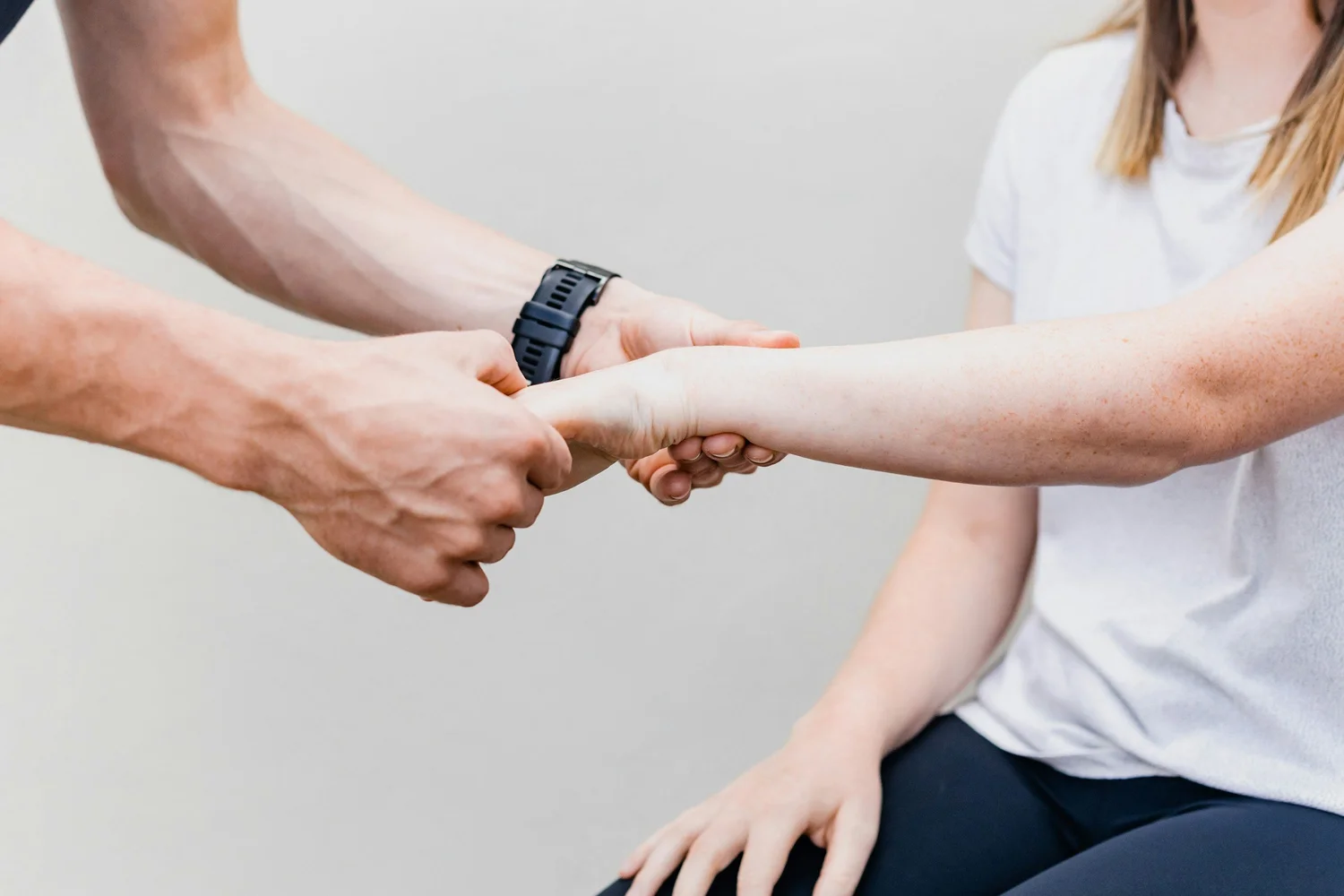
Elbow, wrist, or hand pain can make gripping, lifting, typing, carrying, exercising, and completing everyday tasks difficult. Oak City Physical Therapy provides one-on-one care focused on restoring comfortable movement, strength, tendon capacity, and confidence.
UNDERSTANDING YOUR SYMPTOMS
The Arm Must Tolerate Repetition, Force and Precision
The elbow, wrist, and hand work together during gripping, lifting, carrying, typing, pushing, pulling, throwing, and fine-motor tasks.
Symptoms may develop when the demands placed on muscles, tendons, joints, or nerves exceed what those tissues can currently tolerate. This may occur after an injury, a sudden increase in activity, repetitive work, immobilization, or gradual overload.
Pain does not automatically mean the area is permanently damaged. Irritated tissues can often become stronger and more tolerant when exercise and activity are appropriately progressed.
Our role is to identify the factors most relevant to your symptoms and rebuild the movement, strength, endurance, and task-specific capacity needed for your goals.
HOW ARM AND HAND PAIN MAY PRESENT
Symptoms and Conditions We Can Help With
Symptoms may begin after trauma, surgery, repetitive work, sports, strength training, prolonged computer use, or gradually over time.
COMMON SYMPTOMS
- Pain on the outside or inside of the elbow
- Pain with gripping or carrying
- Weakness opening jars or holding objects
- Wrist pain with pushing or weight bearing
- Pain during typing or computer work
- Numbness or tingling into the hand
- Forearm tightness or fatigue
- Difficulty lifting weights or playing sports
- Hand stiffness or reduced dexterity
- Pain following fracture, surgery, or immobilization
- Symptoms during throwing or racquet sports
- Difficulty returning to work or hobbies
COMMON CONDITIONS
- Lateral elbow tendinopathy
- Medial elbow tendinopathy
- Distal biceps or triceps rehabilitation
- Elbow stiffness after injury
- Wrist sprains and strains
- De Quervain’s tenosynovitis
- Carpal tunnel-related symptoms
- Ulnar nerve-related symptoms
- Thumb and hand overuse conditions
- Post-fracture rehabilitation
- Postoperative rehabilitation
- Persistent or recurring arm pain
Significant trauma, visible deformity, rapidly increasing swelling, inability to move the hand or fingers, loss of circulation, open injury, fever, or rapidly worsening weakness requires appropriate medical evaluation.
LATERAL ELBOW TENDINOPATHY
“Tennis Elbow” Is Usually a Load-Tolerance Problem
Lateral elbow tendinopathy commonly causes pain near the outside of the elbow during gripping, lifting, carrying, typing, racquet sports, or resistance training.
Despite the name, many people with this condition do not play tennis. Symptoms often develop when repeated wrist and gripping demands increase faster than the forearm tendons can adapt.
Rest, bracing, massage, injections, or needling may reduce symptoms temporarily, but the tendon still needs progressive resistance to rebuild capacity.
The tendon needs a manageable training stimulus. Too little loading may reduce capacity, while too much loading too quickly may keep symptoms irritable.
NUMBNESS, TINGLING & NERVE-RELATED PAIN
Nerve Symptoms Require a Broader Examination
Numbness, tingling, burning, weakness, or altered hand sensation may be related to irritation at the wrist, elbow, shoulder region, neck, or multiple locations along the nerve pathway.
Symptom Distribution
The location of numbness or tingling may provide clues about which nerve or region is involved.
Strength and Sensation
Grip, finger strength, sensation, reflexes, and coordination may be assessed when appropriate.
Neck and Upper-Quarter Screening
Symptoms in the hand may originate higher in the arm or cervical spine even when neck pain is minimal.
Referral When Needed
Progressive weakness, severe sensory loss, or concerning findings may require medical or specialist evaluation.
Treatment should address the location and mechanism contributing to the symptoms—not simply stretch or massage the area where tingling is felt.
WRIST, THUMB & HAND PAIN
Small Joints Still Need Strength and Load Tolerance
Wrist and hand symptoms may be aggravated by typing, gripping, childcare, tool use, lifting, push-ups, yoga, cycling, racquet sports, or repetitive thumb movement.
Temporary splinting or activity modification may help highly irritable symptoms, but prolonged avoidance can lead to weakness, stiffness, and reduced confidence using the hand.
Rehabilitation may include mobility, progressive grip and pinch strengthening, forearm loading, weight-bearing progression, and task-specific practice.
BUILDING LASTING CAPACITY
Why Elbow, Wrist and Hand Pain Often Returns
Symptoms may improve before the arm has regained enough strength and endurance for the actual demands of work, exercise, or sport.
Grip Capacity Remains Limited
Daily tasks may feel easier while heavier or repeated gripping still exceeds current tolerance.
Loading Is Not Progressed
Exercises may remain too light or stop once pain begins to decrease.
Workload Returns Too Quickly
Typing, tool use, lifting, climbing, throwing, or training volume may increase faster than capacity.
Care Remains Passive
Temporary symptom relief does not replace the need for active strengthening and task-specific preparation.
Long-term improvement depends on preparing the arm for the force, repetition, duration, and precision required by your daily activities.
OUR CLINICAL APPROACH
A One-on-One Assessment Built Around Your Symptoms
Your examination is selected according to symptom location, injury history, neurological symptoms, work demands, sport, and functional goals.
Detailed History
We review symptom onset, repetitive demands, trauma, training changes, previous treatment, work tasks, and goals.
Mobility and Movement
We assess the elbow, forearm, wrist, hand, shoulder, and neck when clinically relevant.
Strength and Load Response
Testing may include grip, pinch, wrist, forearm, elbow, and upper-body strength.
Neurological and Functional Testing
We may assess sensation, reflexes, nerve sensitivity, dexterity, lifting, typing, throwing, or sport-specific tasks.
Your plan is based on measurable limitations, symptom behavior, and task demands—not one isolated test or tender point.
INDIVIDUALIZED TREATMENT
How Oak City Physical Therapy Can Help
Treatment is selected according to your condition, healing status, symptom irritability, strength, workload, and goals.
Progressive Strengthening
Build grip, wrist, forearm, elbow, shoulder, and upper-body capacity using measurable resistance.
Mobility and Range of Motion
Restore elbow, forearm, wrist, and hand movement following pain, injury, surgery, or immobilization.
Load Management
Adjust aggravating activity temporarily while progressively building tolerance for greater use.
Nerve Mobility and Desensitization
Use targeted movement and exposure when neural sensitivity appears to be contributing.
Manual Therapy
Joint and soft-tissue techniques may provide short-term relief when pain or stiffness limits movement.
Work- and Sport-Specific Training
Prepare for gripping, lifting, carrying, climbing, typing, throwing, racquet sports, or other meaningful demands.
A PLANNED PROGRESSION
Upper-Extremity Rehabilitation Should Progress With You
Your starting point depends on the condition, but treatment should advance as pain, motion, strength, and tolerance improve.
Reduce Irritability
Modify excessive load and begin tolerable movement or muscle activation.
Restore Motion
Improve elbow, forearm, wrist, finger, or thumb movement as needed.
Build Foundational Strength
Progress gripping, wrist, forearm, elbow, and shoulder resistance.
Increase Repetition and Endurance
Prepare for typing, carrying, work tasks, instrument use, or repeated gripping.
Add Speed or Higher Force
Introduce throwing, climbing, heavier lifting, racquet work, or faster loading when relevant.
Return to Full Function
Recreate the volume and intensity required for work, exercise, recreation, or sport.
YOUR FIRST APPOINTMENT
What to Expect at Your First Visit
Your first visit is a 45-minute, one-on-one evaluation with a Doctor of Physical Therapy.
We will review how symptoms began, the tasks that aggravate them, previous treatment, work demands, exercise or sport requirements, and your goals.
The examination may include mobility, grip and upper-extremity strength, neurological screening, and testing of the specific activities that have become difficult.
You will leave understanding:
FREQUENTLY ASKED QUESTIONS
Elbow, Wrist and Hand Pain FAQs
Should I rest completely if I have tennis elbow?
Complete rest may temporarily reduce symptoms, but it does not rebuild tendon capacity. Gripping and lifting may need modification while progressive strengthening is introduced.
Do braces or straps help elbow pain?
A brace or counterforce strap may reduce symptoms during selected activities for some patients. It is a temporary support and does not replace progressive rehabilitation.
Can I keep lifting with elbow or wrist pain?
Often, yes. Grip position, resistance, range, exercise selection, and training volume may need temporary adjustment while capacity is rebuilt.
Is numbness in my hand always carpal tunnel syndrome?
No. Numbness and tingling may originate from the wrist, elbow, neck, or another neurological or medical condition. The symptom pattern should be evaluated rather than assumed.
Can neck problems cause hand symptoms?
Yes. Cervical nerve irritation can produce pain, tingling, numbness, or weakness into the arm and hand even when neck pain is mild.
Do I need an MRI before beginning physical therapy?
Many patients can begin with a clinical evaluation. Imaging may be appropriate after significant trauma, suspected fracture, major weakness, surgical planning, or lack of expected progress.
Can dry needling help elbow or forearm pain?
Dry needling may provide short-term symptom relief for selected patients. It is optional and does not replace progressive tendon, grip, and upper-extremity strengthening.
Should I avoid typing if it aggravates my wrist or hand?
Typing volume, position, breaks, or workstation setup may need temporary adjustment. The long-term goal is usually to improve tolerance rather than avoid computer use indefinitely.
How long does tendon rehabilitation take?
Tendons generally require consistent progressive loading over time. Recovery depends on symptom duration, irritability, strength, repetitive demands, and consistency with rehabilitation.
When should I see a hand specialist?
Referral may be appropriate for significant trauma, suspected fracture, severe locking, progressive neurological loss, major tendon injury, persistent swelling, or symptoms that do not progress as expected.