
AUTO ACCIDENT & PERSONAL INJURY REHABILITATION
Car Accident Physical Therapy in Raleigh
Pain after a car accident can affect your ability to work, sleep, drive, exercise, care for your family, and complete normal daily activities. Oak City Physical Therapy provides one-on-one rehabilitation focused on reducing limitations, restoring physical capacity, and documenting your functional recovery clearly.
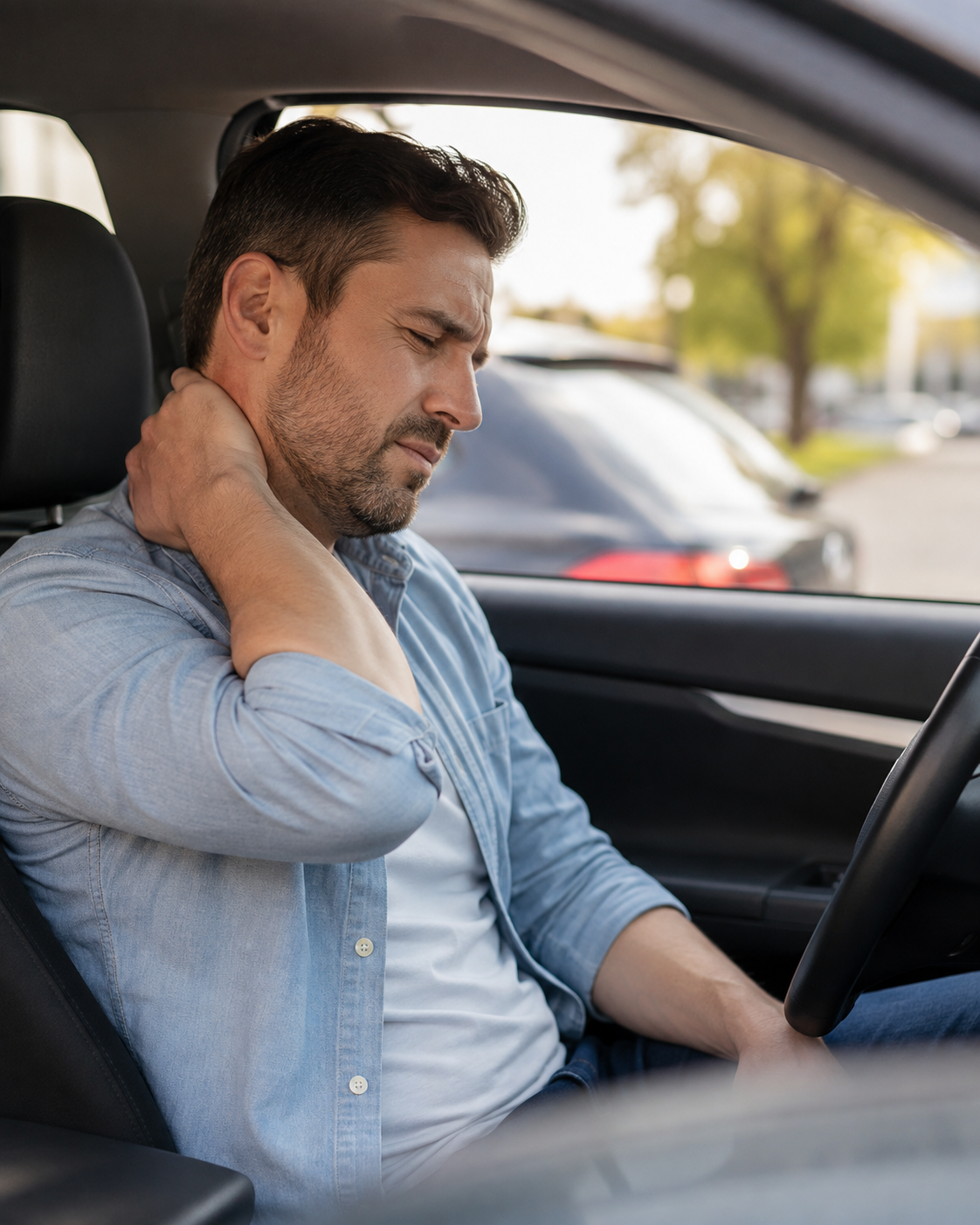
UNDERSTANDING YOUR SYMPTOMS
Symptoms May Change During the Days After a Collision
A motor-vehicle collision can expose the body to sudden acceleration, deceleration, bracing, and unexpected force. Muscles, joints, nerves, and other tissues may become painful or sensitive even when no fracture or major structural injury is present.
Some symptoms begin immediately. Others become more noticeable over the following hours or days as stiffness, inflammation, guarding, and nervous-system sensitivity develop.
Pain after an accident should be taken seriously, but pain intensity does not always indicate the amount of tissue damage. Significant pain can occur without a dangerous injury, while some serious conditions may initially produce less dramatic symptoms.
A careful history, medical screening, and physical examination help determine whether rehabilitation is appropriate and what should be addressed first.
COMMON ACCIDENT-RELATED PRESENTATIONS
Symptoms and Injuries We Can Help With
Motor-vehicle collisions may affect one area or multiple regions of the body. Treatment is based on your examination rather than the accident mechanism alone.
COMMON SYMPTOMS
- Neck pain and stiffness
- Headaches following the collision
- Shoulder or shoulder-blade pain
- Low-back pain
- Hip or knee pain
- Muscle tightness and guarding
- Pain with prolonged sitting or driving
- Difficulty sleeping comfortably
- Numbness or tingling into an arm or leg
- Dizziness or motion sensitivity
- Reduced tolerance for work or exercise
- Fear or uncertainty with movement
COMMON INJURIES
- Whiplash-associated disorders
- Cervical and lumbar strains
- Joint sprains
- Shoulder injuries
- Contusions and bruising
- Headache with cervical contributors
- Post-concussion symptoms
- Vestibular dysfunction
- Nerve irritation
- Fracture rehabilitation after medical clearance
- Post-surgical rehabilitation
- Persistent pain following a collision
Severe trauma, loss of consciousness, worsening neurological symptoms, chest or abdominal pain, difficulty breathing, suspected fracture, or rapidly worsening symptoms require prompt medical evaluation.
WHIPLASH-ASSOCIATED DISORDERS
Whiplash Can Affect More Than Neck Range of Motion
Whiplash describes the acceleration-and-deceleration mechanism that may occur during a collision. The resulting symptoms can involve joints, muscles, ligaments, nerves, balance systems, and the way the nervous system processes movement and pain.
Common complaints include neck stiffness, headache, upper-back pain, shoulder-blade discomfort, difficulty concentrating, dizziness, and reduced tolerance for sitting or driving.
Early rehabilitation often emphasizes education, tolerable movement, restoration of daily activity, and gradual cervical loading rather than prolonged immobilization or fear-driven avoidance.
The neck is not automatically fragile after a collision. Movement and strengthening should be introduced according to your symptoms, medical findings, and current tolerance.
HEADACHE, DIZZINESS & CONCUSSION
Head Impact Is Not Required for a Concussion to Occur
A concussion may occur when forces transmitted through the body cause rapid movement of the brain within the skull. Symptoms can overlap with cervical injury, vestibular dysfunction, headache disorders, stress, and sleep disruption.
Headache and Pressure
Symptoms may be influenced by the brain, cervical region, migraine mechanisms, or a combination of factors.
Dizziness and Imbalance
Vestibular, visual, positional, cervical, and exertional factors may contribute to unsteadiness or motion sensitivity.
Visual and Cognitive Symptoms
Reading, screen use, busy environments, concentration, and driving may become more difficult.
Graded Return to Activity
Work, exercise, visual activity, and driving demands are reintroduced progressively according to symptoms and medical guidance.
Concussion symptoms require appropriate medical screening. Rehabilitation may include cervical care, vestibular treatment, balance training, and graded exertion when indicated.
WHEN RECOVERY TAKES LONGER
Persistent Symptoms Are Not Always Evidence of Ongoing Damage
Symptoms may continue when strength, endurance, movement tolerance, sleep, confidence, or nervous-system sensitivity have not returned to their previous level.
Protective Guarding Continues
Muscles may remain tense and movement may feel threatening even after the most acute stage has passed.
Activity Remains Limited
Prolonged rest can reduce strength, endurance, and tolerance for sitting, driving, lifting, or exercise.
Multiple Systems Are Involved
Cervical, vestibular, headache, neurological, and orthopedic findings may overlap.
Rehabilitation Stops at Pain Relief
Reduced symptoms do not guarantee that work capacity, strength, and confidence have returned.
Recovery should focus on restoring what the accident took away—not simply waiting for symptoms to disappear.
CLEAR CLINICAL DOCUMENTATION
Your Medical Record Should Reflect More Than a Pain Score
Personal-injury cases often require clear documentation of the accident, symptoms, objective findings, treatment, functional limitations, and progress over time.
We document the activities affected by your condition, such as work, sleep, driving, lifting, household tasks, exercise, and caregiving.
Objective findings may include range of motion, strength, endurance, neurological testing, balance, activity tolerance, and functional outcome measures.
Documentation must remain accurate and clinically grounded. The purpose is to describe your condition and rehabilitation honestly—not exaggerate or minimize it.
PERSONAL-INJURY CLAIMS
We Keep Clinical Care Separate From Legal Advice
Our role is to evaluate and treat your physical condition, document your care accurately, and communicate relevant medical information when properly authorized.
Attorney Communication
Records and clinical updates may be provided to your attorney after receiving the required written authorization.
Insurance Information
Claim details and billing information should be provided as early as possible so coverage and payment arrangements can be reviewed.
Medical Coordination
We may communicate with physicians or other providers when additional testing, restrictions, or coordinated care is needed.
No Legal Representation
We do not determine fault, settlement value, legal strategy, or whether you need an attorney.
Coverage and payment arrangements vary by claim. Contact the clinic before your first visit so we can review the information needed for scheduling and billing.
OUR CLINICAL EVALUATION
A One-on-One Assessment Based on Your Injuries
Your examination is adapted to the accident, affected body regions, medical findings, symptoms, irritability, work demands, and goals.
Detailed History
We review the collision, symptom onset, emergency or urgent care, imaging, medications, previous health, and current limitations.
Movement and Strength
We assess relevant mobility, muscular activation, endurance, load tolerance, and functional movement.
Neurological and Vestibular Screening
Testing may include sensation, strength, reflexes, balance, eye movement, positional testing, or concussion screening.
Functional Assessment
We evaluate the activities most affected, such as sitting, driving, lifting, work, walking, exercise, or caregiving.
The examination is designed to identify treatable limitations and screen for findings that require additional medical evaluation.
INDIVIDUALIZED REHABILITATION
How Oak City Physical Therapy Can Help
Treatment is based on your injuries, current symptoms, measurable limitations, medical recommendations, and functional goals.
Movement Restoration
Restore comfortable neck, back, shoulder, hip, or extremity movement through active mobility and graded exposure.
Progressive Strengthening
Rebuild muscular support, endurance, and tolerance for daily activity, work, lifting, and exercise.
Balance and Vestibular Care
Address dizziness, positional vertigo, motion sensitivity, imbalance, or post-concussion limitations when indicated.
Graded Activity Progression
Increase sitting, driving, walking, lifting, work, and exercise tolerance without advancing too quickly.
Manual Therapy
Hands-on techniques may help reduce guarding or improve short-term mobility so active rehabilitation can progress.
Education and Self-Management
Understand symptom behavior, flare-ups, activity modification, and how to progress safely between appointments.
A PLANNED RECOVERY
Rehabilitation Should Progress With Your Abilities
The exact starting point depends on the injuries and symptoms, but care should gradually move from symptom-limited activity toward full functional capacity.
Screen and Establish Safety
Review medical findings, identify concerning symptoms, and determine what can be addressed safely.
Restore Tolerable Movement
Begin comfortable mobility, walking, breathing, and basic muscle activation.
Build Strength and Endurance
Progress resistance and repeated activity according to symptom response.
Increase Daily Function
Restore sitting, driving, sleeping, lifting, household tasks, and community activity.
Return to Work and Exercise
Rebuild the duration, force, repetition, and concentration required for normal responsibilities.
Build Independence
Establish a long-term plan for exercise, flare-ups, and continued physical recovery.
WHEN TO SEEK URGENT MEDICAL CARE
Some Symptoms After a Collision Need Immediate Evaluation
New or worsening symptoms should not be assumed to be routine soreness, especially after significant trauma.
Call emergency services for severe neurological symptoms, significant breathing difficulty, loss of consciousness, suspected internal injury, or another medical emergency.
YOUR FIRST APPOINTMENT
What to Expect at Your First Visit
Your first visit is a 45-minute, one-on-one evaluation with a Doctor of Physical Therapy.
We will review the collision, medical care received, imaging, medications, symptoms, previous health, work demands, and activities that have become difficult.
The examination is adapted to your symptoms and may include mobility, strength, neurological screening, balance, cervical testing, walking, lifting, or other relevant functional tasks.
Please bring when available:
FREQUENTLY ASKED QUESTIONS
Car Accident Physical Therapy FAQs
When should I begin physical therapy after a car accident?
Treatment may begin once urgent injuries have been ruled out and you are medically stable. The appropriate timing depends on your symptoms, injuries, and recommendations from other providers.
Do I need to see a physician first?
North Carolina allows direct access to physical therapy, but medical evaluation may be necessary after significant trauma, suspected concussion, neurological symptoms, fracture concerns, or other potentially serious injuries.
What if my X-rays were normal but I still hurt?
X-rays primarily evaluate bones and certain joint findings. Muscle, ligament, nerve, vestibular, and movement-related problems may still cause significant pain and functional limitations.
Can whiplash cause headaches or dizziness?
Yes. Cervical injury, vestibular dysfunction, concussion, migraine, and other factors may contribute. The symptom pattern should be evaluated rather than attributed automatically to one cause.
Should I wear a neck brace after a collision?
A brace may be required for certain diagnosed injuries, but prolonged immobilization is not routinely appropriate for uncomplicated whiplash. Follow the instructions of the medical provider who assessed the injury.
Can physical therapy help if the accident happened months ago?
Yes. Persistent symptoms may involve strength deficits, reduced endurance, movement sensitivity, vestibular findings, or fear-related avoidance that may still respond to rehabilitation.
Will you communicate with my attorney?
We may provide records or appropriate clinical information after receiving valid written authorization. Our role is clinical care and documentation, not legal representation.
Do you determine what my injury claim is worth?
No. Physical therapists do not determine fault, settlement value, or legal strategy. We document and treat your physical condition.
How long will recovery take?
Recovery depends on the injuries, symptom severity, neurological or vestibular involvement, previous health, work demands, sleep, stress, and consistency with rehabilitation.
Do I have to be pain-free before returning to work?
Not always. Return may occur gradually with restrictions or modifications depending on your job, symptoms, strength, concentration, driving needs, and medical recommendations.